Monday, February 1, 2016

UNFCCC


UNFCCC
By Anton Antonio
February 1, 2016

The persistent question from most climate change observers is how come nothing substantial was achieved in the 20 Conferences of the Parties (COPs) which started in 1992 and culminated in 2015 at the Paris Climate Talks or COP 21.  The United Nations Framework Convention on Climate Change, or UNFCCC, is a just a framework agreement and recommends no particular level of reduction in greenhouse gas emissions.  More importantly, as a mere framework agreement, it also lacks an enforcement mechanism.  In fact, the target in climate change mitigation being suggested in the previous COPs held was only 2 degrees Celsius using the pre-industrial period as benchmark.

Here is a researched material on the UNFCCC…  “The United Nations Framework Convention on Climate Change (UNFCCC) is an international environmental treaty negotiated at the Earth Summit in Rio de Janeiro from 3 to 14 June 1992, then entered into force on 21 March 1994.  The UNFCCC objective is to “stabilize greenhouse gas concentrations in the atmosphere at a level that would prevent dangerous anthropogenic interference with the climate system”.  The framework set no binding limits on greenhouse gas emissions for individual countries and contains no enforcement mechanism.  Instead, the framework outlines how specific international treaties (called “protocols” or “agreements”) may be negotiated to set binding limits on greenhouse gases.  Initially an Intergovernmental Negotiating Committee produced the text of the Framework Convention during its meeting in New York from 30 April to 9 May 1992.  The UNFCCC was adopted on 9 May 1992, and opened for signature on 4 June 1992.  UNFCCC has 197 parties as of December 2015.  The convention enjoys broad legitimacy, largely due to its nearly universal membership.  The parties to the convention have met annually from 1995 in Conferences of the Parties (COP) to assess progress in dealing with climate change.  In 1997, the Kyoto Protocol was concluded and established legally binding obligations for developed countries to reduce their greenhouse gas emissions in the period 2008-2012.  The 2010 Cancun agreements state that future global warming should be limited to below 2.0 degrees Celsius relative to the pre-industrial level.  The protocol was amended in 2012 to encompass the period 2013-2012 in the Doha Amendment which was – as of December 2015 – not entered into force.  In 2015 the Paris Agreement was adopted, governing emission reductions from 2020 on through commitments of countries in ambitious Nationally Determined Contributions.  One of the first tasks set by the UNFCCC was for signatory nations to establish national greenhouse gas inventories of greenhouse gas (GHG) emissions and removals, which were used to create the 1990 benchmark levels for accession of Annex I countries to the Kyoto Protocol and for the commitment of those countries to GHG reductions.  Updated inventories must be regularly submitted by Annex I countries.”  (Wikipedia)

The passing of 20 COPs made people, especially climate scientists, worried that an acceptable GHG emission-limiting mechanism will never be realized.  But prior to COP21, or the Paris Climate Talks of 2015, the best strategy was laid on the table… the NDC or Nationally Determined Contributions.  In this initiative, individual countries were given the freedom to set their own individual targets.  And summing up these targets translated to a 1.5 degrees Celsius commitment from all participating parties… not the previously targeted 2.0 degrees Celsius.  With this, there is now better hope with what was started by the UNFCCC.

Thoughts to promote positive action…

(Please visit, like and share Pro-EARTH Crusaders on Facebook or follow me at http://antonantonio.blogspot.com/ and http://twitter.com/EarthCrusader/)

REFERENCE:

Wikipedia (2016).  “United Nations Framework Convention on Climate Change”.  Retrieved on February 1, 2016 from https://en.wikipedia.org/wiki/United_Nations_Framework_Convention_on_Climate_Change


Friday, January 29, 2016

Respect


RESPECT
By Anton Antonio
January 30, 2016

This beautiful and moving photo was posted by my friend, Ed Finlan, yesterday on his Facebook page.  (Please see accompanying photo.)  It is a picture of a man with his fist raised (seemingly in protest) as he welcomes the morning sun.  It made me feel somewhat nostalgic as it brought back memories of the early days of our pro-environmental advocacy and activism.

We used to run the streets to do surveys and studies to determine the awareness level of people on environmental issues and concerns… and people looked at us as if we were from a different planet.  We used to talk about the sad state of our environment in social gatherings… and people showed us obvious disconnect, apathy and gave us cold shoulders.  We use to join public forums to defend Mother Earth… and we will be brushed away as if we were dysfunctional.  We used to talk to government officials about alternative initiatives to mitigate the effects of climate change… and we were treated in a very condescending manner.  We definitely were not treated well and fairly before.  And this was largely the way pro-environmental advocates and activists all over the world were treated.

Last year, however, when two world leaders --- Pope Francis of the Holy See and President Barack H. Obama of the United States of America --- spoke on the realities of climate change… and the world paused and listened.  And after the Paris Climate Talks last December (2015), people and the world now view and treat pro-environment advocates and activists with a little bit more respect.

Thoughts to promote positive action…

(Please visit, like and share Pro-EARTH Crusaders on Facebook or follow me at http://antonantonio.blogspot.com/ and http://twitter.com/EarthCrusader/)


Thursday, January 28, 2016

International Tropical Timber Organization


INTERNATIONAL TROPICAL TIMBER ORGANIZATION
By Anton Antonio
January 29, 2016

One of the underlying messages at the Earth Summit in 1992 was the concept of sustainable development.  The World Bank defines “sustainable development” as “Development that meets the needs of the present without compromising the ability of the future generations to meet their own needs.”  Sustainable development contains two key concepts: (1) the concept of needs, in particular the essential needs of the world’s poor, to which overriding priority should be given; and, (2) the idea of limitations imposed by the state of technology and social organization on the environment’s ability to meet present and future needs.

The concept of “sustainable forest management”, on the other hand, is also anchored on the same sustainable development concept as popularized at the Earth Summit.  Popularizing and promoting sustainable forest management is the primary objective of the International Tropical Timber Organization (ITTO).

“The International Tropical Timber Organization (ITTO) is an intergovernmental organization that promotes conservation of tropical forest resources and their sustainable management, use and trade.  The organization was established under the International Tropical Timber Agreement (ITTA), which was sponsored by the Unites Nations Conference on Trade and Development and was ratified in 1985.  Its mandate was renewed by the International Tropical Timber Agreement, 1994 and again by the International Tropical Timber Agreement, 2006, which aims to promote sustainable management and legal harvesting of forests that produce tropical timber, and to promote expansion and diversification of international trade in timber from these forests.  The governing body is the International Tropical Timber Council (ITTC).  Half the votes on the ITTC are assigned to producing countries and half to consumers.  Within each block, votes are assigned based on market share.  The ITTO was at first primarily a commodity organization, regulating the international trade in tropical timber.  The original mandate mentioned conservation but did not give any details.  In 1990 the ITTC proposed that by 2000 all exports of tropical timber would come from sustainably managed sources, and this goal was adopted.  In 1987 the ITTO commissioned the Harvard Institute for International Development to prepare a review of current knowledge of multiple-use management of tropical forests.  Of interest was the potential for non-timber forest products and services that could assist in sustaining the forest.  HIID compiled the study in 1988 and issued updated versions in 1990 and 1992.  The ITTO publishes a quarterly newsletter, Tropical Forest Update (ISSN 1022-5439), available also online.” (Wikipedia)

Although the ITTO is an intergovernmental organization and international in scope, the success of sustainable forest management largely depends on the individual country’s institutions and systems that protect the forest.  Weak systems and institutional structures, however, will most likely result to poor implementation of the goals and objectives of the International Tropical Timber Organization.

Thoughts to promote positive action…

(Please visit, like and share Pro-EARTH Crusaders on Facebook or follow me at http://antonantonio.blogspot.com/ and http://twitter.com/EarthCrusader/)

REFERENCE:

Wikipedia, (2016). “International Tropical Timber Organization”.  Retrieved on January 29, 2016 from https://en.wikipedia.org/wiki/International_Tropical_Timber_Organization


Wednesday, January 27, 2016

Biosequestration


BIOSEQUESTRATION
By Anton Antonio
January 28, 2016

“I have often been asked this question:  “If you were to recommend just one initiative or solution to the different environmental problems, what will it be?”  After a three-year academic study in environmental science, I’ve come to realize that environmental problems are so diverse and multifarious that conceptualizing a single cure-all solution will practically be like formulating a single pill (a “wonder drug”) that could cure all conceivable medical problems of man.  It’s a tough call but there should be one.  I would always answer, often automatically, “reforestation”.” (Antonio, 2016)  My reason for choosing reforestation is without basis.  Please read the following researched material on biosequestration which only trees and plants can perform…

“Biosequestration is the capture and storage of the atmospheric greenhouse gas carbon dioxide by biological processes.  This may ne by increased photosynthesis (through practices such as reforestation / preventing deforestation and genetic engineering); by enhanced soil carbon trapping in agriculture; or by the use of algae biosequestration to absorb the carbon dioxide emissions from coal, petroleum (oil) or natural gas-fired electricity generation.  Biosequestration as a natural process has occurred in the past, and was responsible for the formation of the extensive coal and oil deposits which are now being burned.  It is a key policy concept in the climate change mitigation debate.  It does not generally refer to the sequestering of carbon dioxide in oceans or rock formation, depleted oil or gas reservoir, deep saline aquifers, or deep coal seams or through the use of industrial chemical carbon dioxide scrubbing.  After water vapour (concentration of which humans have limited capacity to influence) carbon dioxide is the most abundant and stable greenhouse gas in the atmosphere.  Methane rapidly reacts to form water vapour and carbon dioxide.  Atmospheric carbon dioxide has increased from about 280 ppm in 1750 to 383 ppm in 2007 and is increasing at an average rate of 2 ppm per year.  The world’s oceans have previously played an important role in sequestering atmospheric carbon dioxide through solubility and the action of phytoplankton.  This, and the likely adverse consequences for humans and the biosphere of associated global warming, increases the significance of investigating policy mechanisms for encouraging biosequestration.  The Intergovernmental Panel on Climate Change (IPCC) estimates that the cutting down of forests is now contributing close to 20 percent of the overall greenhouse entering the atmosphere.  There are four primary ways in which reforestation and reducing deforestation can increase biosequestration.  FIRST, by increasing the volume of existing forest. SECOND, by increasing the carbon density of existing forest at a stand and landscape scale. THIRD, by expanding the use of forest products that will sustainably replace fossil-fuel emissions. FOURTH, by reducing carbon emissions that are caused from deforestation and degradation.  Land clearing reduction, the majority of the time, create biodiversity benefits in a vast expanse of land regions.  Concerns, however, arise when the density and area of vegetation increases the grazing pressure could also increase in other areas, causing land degradation.”  (Wikipedia)

Biosequestration is a unique process that captures and stores carbons.  “Unique” because the process goes beyond not only converting carbon dioxide into oxygen but permanently capturing carbon as well.  This is the most environmentally helpful function of biosequestration.

Thoughts to promote positive action…

(Please visit, like and share Pro-EARTH Crusaders on Facebook or follow me at http://antonantonio.blogspot.com/ and http://twitter.com/EarthCrusader/)

REFERENCES:

Wikipedia, (2016).  “Biosequestration”.  Retrieved on January 24, 2016 from https://en.wikipedia.org/wiki/Biosequestration

Antonio, A. C., (2016). “Reforestation”.  Retrieved on January 28, 2016 from http://antonantonio.blogspot.com/2016/01/reforestation.html


Tuesday, January 26, 2016

I.U.C.N. Red List of Threatened Species


I.U.C.N. RED LIST OF THREATENED SPECIES
By Anton Antonio
January 27, 2016

There are certain species of plants and animals that are endemic (meaning: native or restricted to a certain country or area) to a specific area.  This makes awareness on these animals and plants practically nil in other parts of the world.  The extinction, therefore, of these flora and fauna species may not be noticed at all.  Based on this condition, a general list of animal and plant species, which are considered threatened by extinction, must be made.  Towards this end, the International Union for the Conservation of Nature (IUCN) took the challenge in coming up with such a list. 

The following is a researched material on this matter…  “The IUCN Red List of Threatened Species (also known as the IUCN Red List or Red Data List), founded in 1964, is the world’s most comprehensive inventory of the global conservation status of biological species.  The International Union for the Conservation of Nature (IUCN) is the world’s main authority on the conservation status of species.  A series of Regional Red Lists are produced by countries or organizations, which assess the risk of extinction to species within a political management unit.  The IUCN Red List is set upon precise criteria to evaluate the extinction risk of thousands of species and subspecies.  These criteria are relevant to all species and all regions of the world.  The aim is to convey the urgency of conservation issues to the public and policy makers, as well as help the international community to try to reduce species extinction.  According to IUCN (1969), the formally stated goals of the Red List are (1) to provide scientifically based information on the status of species and subspecies at a global level, (2) to draw attention to the magnitude and importance of threatened biodiversity, (3) to influence national and international policy and decision-making, and (4) to provide information to guide actions to conserve biological diversity.  Major species assessors include BirdLife International, the Institute of Zoology (the research division of the Zoological Society of London), the World Conservation Monitoring Centre, and many Specialist Groups within the IUCN Species Survival Commission (SSC).  Collectively, assessments by these organizations and groups account for nearly half the species on the Red List.  The IUCN aims to have the category of every species re-evaluates every five years if possible, or at least every ten years.  This is done in a peer reviewed manner through IUCN Species Survival Commission (SSC) Specialist Groups, which are Red List Authorities responsible for a species, group of species or specific geographical area, or in the case of BirdLIfe International, an entire class (Aves).”  (Wikipedia)

In spite of the IUCN accounting of the threatened and endangered species, possible extinction of species still persist.  Coming up with the Red List, therefore, is not the final solution to the problem.  Success has to do with enforcement from the local level.  If not, the listing will not work and it will just be a worthless exercise.  Let’s support this initiative… the IUCN Red List of Threatened Species.

Thoughts to promote positive action…

(Please visit, like and share Pro-EARTH Crusaders on Facebook or follow me at http://antonantonio.blogspot.com/ and http://twitter.com/EarthCrusader/)

REFERENCE:

Wikipedia, (2015).  “IUCN Red List”.  Retrieved on January 27, 2016 from https://en.wikipedia.org/wiki/IUCN_Red_List


Monday, January 25, 2016

Thank You


THANK YOU
By Anton Antonio
January 26, 2016

After publishing my 666th blog yesterday, I came across some revealing and interesting statistics.  Out of 23,490 readers, 33% are from the Philippines, 25% come from the United States, 6% come from Russia, and 36% from other parts of the world.  The readers from these three countries (the Philippines, the United States and Russia) represent a significant portion of my blog readers --- at 64%.

It is not surprising that Filipinos turned out to be the majority of the readers since most of the articles refer to the Philippine socio-political and environmental setting and the human interest stories are mostly about Filipinos as well.  The one-fourth share of the United States in the total blog readership is also not surprising since (1) the blog is in the English language and (2) it is influenced by the fact that there is a substantial number of Filipinos living in the U.S. and most are even U.S. citizens or permanent residents there.  Quite surprising is the number of readers from Russia.  The Russians do not share a lot of commonalities with Filipinos… history, creed, religion, culture and tradition.  And the Philippines was never colonized by Russia neither.

The top three most-read blogs are: (1) “Achievements of the Earth Summit” – published on April 13, 2014; (2) “ Types of Environmental Resources” – published on January 19, 2015; and, (3) “Laws of Tolerance and Limiting Factor” – published on February 1, 2015.

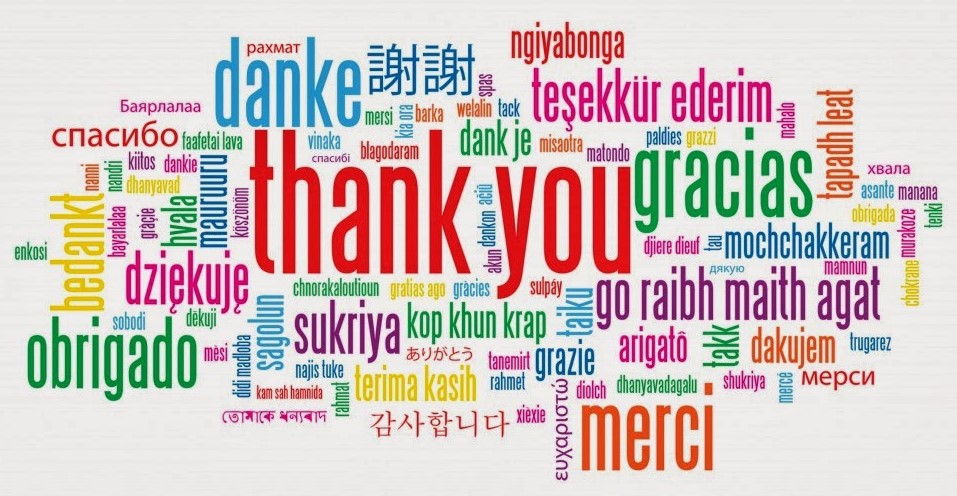
To all my dear readers, especially my fellow Filipinos, Americans and Russians, who took interest in and continuously read my blogs, please allow me to appreciate your patronage by saying THANK YOU!

Thoughts to promote positive action…

(Please visit, like and share Pro-EARTH Crusaders on Facebook or follow me at http://antonantonio.blogspot.com/ and http://twitter.com/EarthCrusader/)


Sunday, January 24, 2016

666


666
By Anton Antonio
January 25, 2016

Today, I am publishing my 666th article in my blogsite, http://antonantonio.blogspot.com/.  The number 666 is quite a controversial one as the following researched information would reveal…

In mathematics, 666 (six hundred sixty six) is the natural number following 665 and preceeding 667.  In religion, folklore and popular culture, 666 is called the “number of the beast” in Chapter 13 of the Book of Revelation of the New Testament. 

In the Textus Receptus manuscripts of the New Testament, the Book of Revelation (13:17-18) cryptically asserts 666 to be “man’s number” or “the number of man” associated with the beast, an antagonistic creature that appears briefly about two-thirds into the apocalyptic vision.  In modern popular culture, 666 has become one of the most widely recognized symbols for the Antichrist or, alternatively, the devil.  The number 666 is purportedly used to invoke Satan.  References to the number occur both among apocalypticist Christian groups and in explicitly anti-Christian subcultures.  References in contemporary Western art or literature are, more likely than not, international references to the Beast symbolism.  It is common to see the symbolic role of the integer 666 transferred to the digit sequence 6-6-6.  Some people take the Satanic associations of 666 so seriously that they avoid things related to 666 or the digits 6-6-6.

Here are more references to the integer 666:
  1. In the Bible, 666 is the number of talents of gold Solomon collected each year;
  2. In the Bible, 666 is the number of Adonikam’s decendants who returned to Jerusalem and Judah from the Babylonian exile;
  3. In the Bible, there may be a latent reference to 666 in the name of the great 6th century BC king of Babylon and Neron Caesar;
  4. In Kabbalistic Judaism, 666 is the number which represents the creation and perfection of the world;
  5. 666 is the magic sum, or sum of the magic constants of a six by six magic square, any rows or column of which adds up to 111;
  6. 666 is the sum of all the numbers on a roulette wheel (0 through 36);
  7. 666 was the winning lottery number in the 1980 Pennsylvania Lottery scandal, in which the draw machine was tampered to favor a 4 or 6 as each of the three individual random digits;
  8. 666 was the original name of the Mcintosh Seven Dust computer that was discovered in 1998;
  9. 666 is a frequently visual element of Aryan Brotherhood tattoos;
  10. Aleister Crowley adopted the namesake “the Great Beast 666”.  As such, 666 was also associates with him, his work, and his religious philosophy of Thelema:
  11. The most common carbon isotope (Carbon-12), is the basis of all known life on earth, consists of 6 protons, 6 neutrons and 6 electrons; and,
  12. In China, the number is considered to be lucky and is often displayed in shop windows and neon signs which can mean “everything goes smoothly.”

666 may stand, represent, mean and signify a wide variety of facts or fiction; but to me (in this particular blog/article) stands for nothing more but antonantonio@blogspot.com Article No. 666.

Thoughts to promote positive action…

(Please visit, like and share Pro-EARTH Crusaders on Facebook or follow me at http://antonantonio.blogspot.com/ and http://twitter.com/EarthCrusader/)

REFERENCE:

Wikipedia, (2016).  “666”.  Retrieved on January 25, 2016 from https://en.wikipedia.org/wiki/666_(number)